Menu

Call Us Today!
385-355-3822We Are Family & Veteran Owned
Schedule Service NowHire Local Trusted Electricians Now
Call this Friday to Get $35 OFF
Call this Friday to Get $35 OFF
Call Us Today!
385-355-3822Hire Local Trusted Electricians Now
Call this Friday to Get $35 OFF
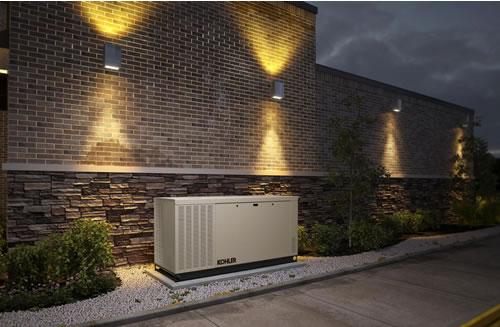
Power outages are not uncommon, and they don’t just turn off the lights. They interrupt work, spoil food, shut down heating and cooling, and bring daily routines to a halt, too. That’s why more and more homeowners are investing in whole-house standby generators.
These systems restore power almost instantly when the grid goes down so that your home continues running with little interruption. This is especially valuable if you have medical equipment that absolutely requires power.
Still, a generator installation is not some plug-and-play device. One of the most important questions to ask is “What can the generator actually power?” Well, it depends. In this brief article brought to you by Mr. Electric, we break it down clearly.
Generators produce electricity measured in watts (or kilowatts; 1 kilowatt equals 1,000 watts). Every appliance and device in your home consumes a specific amount of watts when running.
The fundamental rule is simple: your generator must produce more watts than all the devices you want to run simultaneously.
Here's where it gets tricky, though: Different appliances demand vastly different amounts of power. So, let’s get a basic grasp of what wants what watts:
Notice the wide range. A generator must handle not only the running watts but also the startup surge that many motors require. More on this next.
Here’s something that throws many elementary calculations off. There’s starting watts, and there’s running watts. Your air conditioner might run on 3,500 watts but need 7,000 watts for the few seconds it takes to start.
Your generator must be able to handle these temporary spikes coming from starting watts, and not just steady running loads. Professional load calculations account for starting watts to ensure your generator can handle actual demands.
With this info on hand, you might be emboldened to do some “back of the napkin math” to determine what generator you need, but be warned: Size the generator too small and you risk overloads, equipment damage, and insufficient power; too large and you waste thousands of dollars on unnecessary capacity.
A certified electrician will evaluate your specific situation; They list all appliances and devices you want to power, measure actual power consumption, account for starting watts and surge requirements, consider simultaneous usage patterns, and factor in future additions or changes.
Only after this nuanced and careful calculation will they give you a precise recommendation for generator size.
Not every homeowner wants or needs to power everything during an outage. Some choose to run only essential circuits while, to be clear, others prefer full-house coverage.
So, making the right choice for your home is a personal matter. The team at Mr. Electric is happy to help you make that decision, and we’ve got you covered with a professional installation so you hit the ground running with your new investment.
Whether you need an electrician’s insight, want to schedule a generator installation, or just need emergency electrical repair service, the dedicated team at Mr. Electric is here to help. Call or message us today to get in touch!
Electricity powers our modern lives, but it's also incredibly powerful and unpredictable. Lightning strikes and utility company maintenance can send millions of volts surging through electrical wiring, destroying everything connected…
Read More +
Power outages are frustrating: One minute everything is working normally, and the next minute the lights are out, the refrigerator is warming up, and your home or business is at…
Read More +
For many Salt Lake City property owners and managers, the electrical panel sits out of sight and out of mind – typically in a closet, basement, or back room. As…
Read More +
Old is not necessarily gold, but it's not always mold, either. While outdated electrical panels can pose safety hazards along with lackluster performance, there are cases when you can make…
Read More +
Electrical engineers work hard to design safe and reliable electrical wiring systems for homes and buildings. They use their knowledge and training to create systems that…
Read More +