Menu

Call Us Today!
385-355-3822We Are Family & Veteran Owned
Schedule Service NowHire Local Trusted Electricians Now
Call this Saturday to Get $35 OFF
Call this Saturday to Get $35 OFF
Call Us Today!
385-355-3822Hire Local Trusted Electricians Now
Call this Saturday to Get $35 OFF
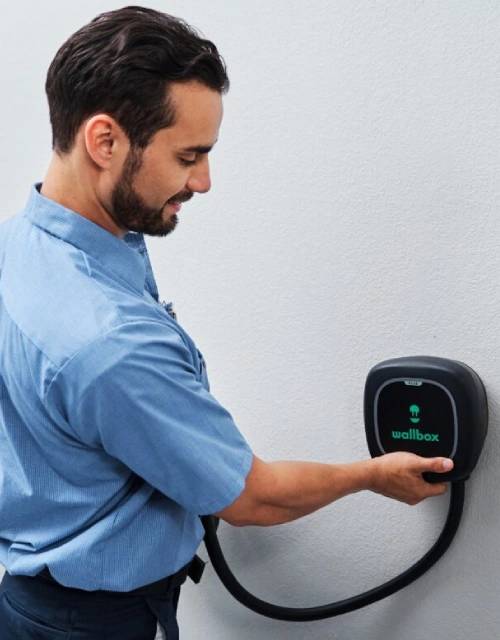
Nothing makes owning an electric vehicle (EV) more convenient than charging at home, but many drivers assume they can simply plug in their EV whenever they want. Sadly, that’s not always the case.
Your home’s electrical system must have the right capacity and proper setup to safely and reliably support an EV charger. In the Salt Lake City area, electrical systems are regulated not only by national standards like the NEC, but also by local building codes and utility rules.
In this brief article brought to you by Mr. Electric, we look at how electrical capacity affects EV charger performance and why proper planning and installation matter. If you’d rather consult a certified electrician in South Salt Lake, UT, then call or message Mr. Electric to get in touch today!
Your building’s electrical panel distributes electricity to everything in your home or business; think lights, outlets, HVAC, kitchen appliances, water heaters, and so on… Electrical capacity refers to how much your electrical panel can support.
Think of your electrical capacity like a water pipe. The bigger the pipe, the more water can flow through it at once. Your electrical panel works the same way.
Most homes have 100- or 200-amp service panels. A 200-amp panel can handle more electrical demand simultaneously than a 100-amp panel.
Level 2 EV chargers typically require a dedicated 240-volt circuit and a sizeable power draw of around 30–50 amps – or more.
If your panel is already near its capacity, then adding an EV charger without planning can overload the system, trip breakers, or create safety issues like fire hazards and shocks.
We are not the only ones who understand the risk of overloading an electrical circuit. EV chargers are considered continuous loads, and the NEC and local Utah codes require chargers to operate on dedicated circuits sized for their specific power draw.
Before installing a charger, an electrician must calculate your home’s electrical load to make sure that there’s enough capacity for the new circuit. Insufficient capacity may mean that your panel needs an upgrade.
Once the electrical panel is confirmed as capable of supporting the electric vehicle charger installation, wiring must be sized correctly. Undersized wiring can overheat, trip breakers, and pose safety hazards.
While safety and legal requirements are most important, electrical capacity also affects the performance of your EV charger.
Level 2 EV chargers deliver power at 240 volts through dedicated circuits ranging from 30 to 60 amps. The higher the amperage, the faster your vehicle charges. A 40-amp charger delivers about 9.6 kilowatts of power, while a 50-amp charger delivers about 12 kilowatts.
But here's the catch: your charger can only perform as well as your electrical system allows. If your home has a 100-amp panel that's already serving other appliances, the charger might not deliver its full power output. That means slower charging times.
For many Salt Lake City homeowners with 200-amp service and modern electrical systems, adding a Level 2 charger is straightforward. The available capacity easily accommodates the new circuit without issues.
But homeowners with 100-amp service or older electrical systems often face different scenarios. Luckily, you're not stuck with slow Level 1 charging. We can recommend a few solutions:
If you’re considering an EV charger installation, then make sure to hire qualified pros from a reputable company. The certified electricians at Mr. Electric are uniformed, insured, and regularly trained.
Contact us today to schedule an appointment or even request emergency electrical repair service for as soon as possible.
That musty smell hanging in your bedroom isn't coming from you; and those stuffy living spaces with thick and stale air aren't your imagination. The problem is that air isn't…
Read More +
Let's be honest: most electrical work doesn't exactly spark joy. You call an electrician because something's broken, money leaves your wallet, and you hope it doesn't happen again. That's just…
Read More +
Electricity powers our modern lives, but it's also incredibly powerful and unpredictable. Lightning strikes and utility company maintenance can send millions of volts surging through electrical wiring, destroying everything connected…
Read More +
Power outages are frustrating: One minute everything is working normally, and the next minute the lights are out, the refrigerator is warming up, and your home or business is at…
Read More +
For many Salt Lake City property owners and managers, the electrical panel sits out of sight and out of mind – typically in a closet, basement, or back room. As…
Read More +