Menu

Call Us Today!
385-355-3822We Are Family & Veteran Owned
Schedule Service NowHire Local Trusted Electricians Now
Call this Wednesday to Get $35 OFF
Call this Wednesday to Get $35 OFF
Call Us Today!
385-355-3822Hire Local Trusted Electricians Now
Call this Wednesday to Get $35 OFF

Most people understand electricity flows in a closed loop. What they don't realize is that homes contain dozens of separate circuits, each with its own circuit breaker and capacity. More importantly, certain appliances absolutely need their own dedicated circuits to safely and reliably operate.
If you’ve ever plugged in one too many devices into an outlet, or nearby outlets in the same room, and the circuit breaker tripped, then you’ve experienced why dedicated circuits matter.
In this brief article brought to you by Mr. Electric, we shed light on the importance – and non-negotiability – of a dedicated appliance circuit installation. If you’d rather consult a certified electrician, then call or message Mr. Electric to get in touch.
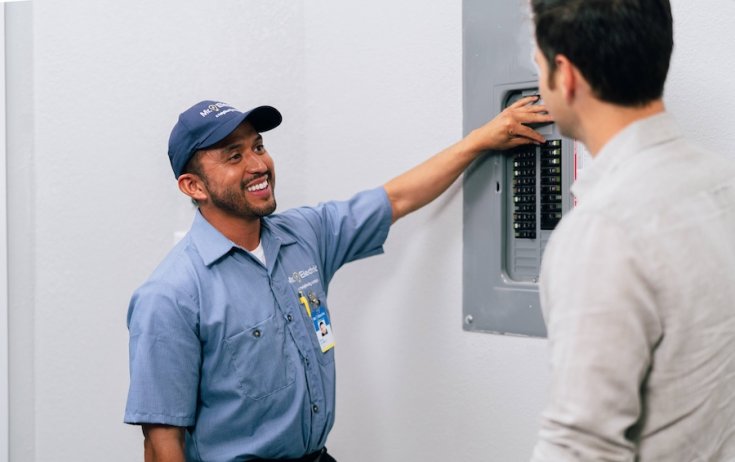
Electrical systems aren't made up of one massive electrical wire powering everything in a home. Instead, they're networks of individual circuits that each originate at the electrical panel and serve specific areas or devices.
This multi-circuit design provides flexibility and safety. If one circuit fails or trips a breaker, then only devices on that circuit will lose power and/or be affected. The rest of the home keeps working. Electricians can perform electrical repairs on one circuit while others remain energized.
Moreover, this design allows circuits to be dedicated to high-power appliances that demand significant electricity. These dedicated circuits make sure that appliances receive the power they need without competing with other devices.
A dedicated circuit serves only one appliance or equipment; No other outlets, lights, or equipment connect to it. The circuit runs from the electrical panel directly to that specific appliance. But why does this matter?
Major appliances draw substantial electrical current (often close to or exceeding what a standard circuit can safely handle). When these appliances share circuits with other devices, they create overload risks, voltage drops that harm equipment, frustrating breaker trips, and fire hazards from overtaxed wiring.
Dedicated circuits mitigate these risks. Appliances get all the power the circuit can deliver; Nothing else competes for that capacity. This way, the appliance operates at peak efficiency without interruption.
Electrical codes typically specify which appliances need dedicated circuits. These requirements are not arbitrary regulation, either; they exist for safety and performance.
Refrigerators and freezers run constantly and draw significant power when compressors start up, for instance. Sharing circuits risks losing power to refrigerators when other devices overload the circuit. That puts food at risk.
Dishwashers also run powerful motors which create substantial electrical demand. They need dedicated circuits to operate without tripping breakers.
Electrical ranges and ovens, as well as, believe it or not, microwaves, also pull significant wattage. Running them on shared circuits risks overloads and inadequate performance.
Like ranges, electric dryers require 240-volt dedicated circuits with substantial amperage ratings. While washing machines are less power-hungry than dryers, they still benefit from dedicated circuits to prevent interruptions.
Furnaces, air conditioners, and water heaters are some other high-load appliances that warrant a dedicated circuit.
Installing dedicated circuits during renovations or new construction costs significantly less than retrofitting them later. After all, wiring runs easily through open walls. If you’re preparing for a renovation, room addition, or new construction, then make sure to ring up your electrician in Holladay, UT to plan ahead.
Circuit installations are NOT something to DIY or leave to some handyman with a toolbox. It involves running new wiring, installing appropriately rated breakers, verifying adequate panel capacity, meeting all electrical codes, and obtaining necessary permits and inspections.
Whether you need a dedicated circuit installed or are looking for emergency electrical repair service, the team at Mr. Electric is ready to help. Call or message us at any time of the day – or night – to get in touch!
That musty smell hanging in your bedroom isn't coming from you; and those stuffy living spaces with thick and stale air aren't your imagination. The problem is that air isn't…
Read More +
Let's be honest: most electrical work doesn't exactly spark joy. You call an electrician because something's broken, money leaves your wallet, and you hope it doesn't happen again. That's just…
Read More +
Electricity powers our modern lives, but it's also incredibly powerful and unpredictable. Lightning strikes and utility company maintenance can send millions of volts surging through electrical wiring, destroying everything connected…
Read More +
Power outages are frustrating: One minute everything is working normally, and the next minute the lights are out, the refrigerator is warming up, and your home or business is at…
Read More +
For many Salt Lake City property owners and managers, the electrical panel sits out of sight and out of mind – typically in a closet, basement, or back room. As…
Read More +