Menu

Call Us Today!
385-355-3822We Are Family & Veteran Owned
Schedule Service NowHire Local Trusted Electricians Now
Call this Thursday to Get $35 OFF
Call this Thursday to Get $35 OFF
Call Us Today!
385-355-3822Hire Local Trusted Electricians Now
Call this Thursday to Get $35 OFF
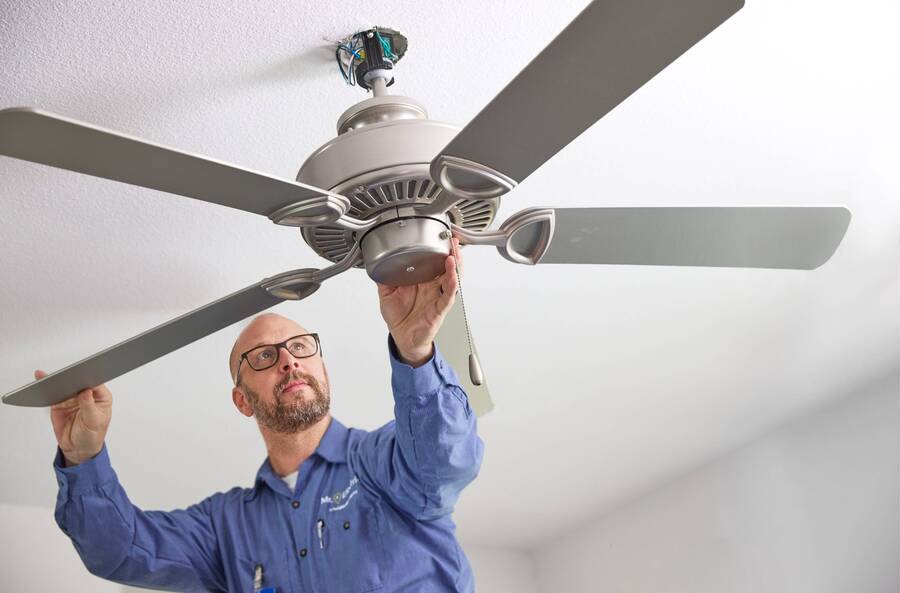
A ceiling fan is surely going to make some noise, but it should not sound like a small construction project.
It’s natural to hear a gentle hum from the motor, a soft rush of air from the blades, or an occasional click when you change the speed. Those sounds usually fall within the normal range.
But homeowners and business owners should know where to draw the line. A fan that wobbles, clicks, hums loudly, or grinds may have a mechanical or electrical problem that deserves attention.
Before you ignore that strange noise, take a few minutes to figure out what your fan may be trying to tell you.
In this brief article brought to you by Mr. Electric, we help you decode the common noises. If the sound points toward a larger electrical issue, our licensed team can help with professional electrical repair service.
This is one of the most common sounds: humming.
A quiet and steady hum naturally comes from the fan motor. Electrical motors produce some sound as they operate… especially at higher speeds. You may also hear a low hum from certain dimmer switches or speed controls.
If the fan suddenly develops a louder hum, the sound goes away when you adjust the speed, or you notice buzzing along with heat or a burning smell, then take it seriously. A loose connection, worn component, or incompatible control can create unwanted electrical noise.
When in doubt, ask a certified electrician to inspect the fan and its connections instead of guessing at the cause. The uniformed pros at Mr. Electric are experienced and regularly trained.
A faint click may not mean anything serious. Some fans make a small clicking sound when the motor changes speeds.
A repetitive click, however, deserves a closer look.
The blades may have a loose screw; A decorative cover may have shifted; Something inside the housing may also rub against a moving component.
There are many potential causes, and an electrician will explore each one. At Mr. Electric, we get at the root of the problem in order to deliver long-lasting results.
Grinding ranks among the biggest red flags. That grinding or scraping sound may mean there are worn bearings, a damaged motor, or another internal mechanical problem. After all, a ceiling fan has moving parts that need to operate smoothly.
The longer you run a fan with a serious mechanical issue, the more damage it will develop. Turn the fan off if you hear a loud grinding noise… especially if you also notice vibration, heat, or a burning smell.
In this case, a repair or part replacement can have you back on schedule… other times, those costs don’t justify themselves and a ceiling fan replacement makes more sense.
In the case of buzzing noise, pay attention to what happens when you change the speed. A faulty speed control, loose connection, or incompatible switch can cause buzzing.
You should also check whether the sound comes from the fan itself or the wall switch. NEVER open an electrical box or ceiling fan housing simply because you want to track down a strange noise. An electrician can safely inspect the wiring and controls.
If the fan shares a circuit with other high-demand equipment, our certified electrician can also determine whether your home needs additional electrical capacity or an appliance circuit installation.
If a sound is making you uncomfortable, you can be sure that the noise is disturbing the ceiling fan, too. Loud buzzing, grinding, repeated clicking, and severe wobbling warrant urgent attention.
Sometimes you need a simple adjustment, sometimes you need a new fan, and sometimes there’s a larger electrical problem. In any case, it’s not a wound that heals with time; issues turn into problems, and those turn into disasters.
Whether you’d like a certified electrician’s opinion, want an appliance circuit installation, or need emergency electrical repair, the team at Mr. Electric is ready, willing, and able to help.
A ceiling fan is surely going to make some noise, but it should not sound like a small construction project. It’s natural to hear a gentle hum from…
Read More +
Air fryers have quickly become a kitchen favorite. They cook food fast, use less oil than traditional frying, and make menus easy to prepare. For many modern families,…
Read More +
Like any piece of electrical equipment, surge protectors do not last forever. Years of power surges, lightning activity, and normal wear can reduce their ability to protect your…
Read More +
A standby generator brings priceless peace of mind during a power outage. Within seconds of your property losing utility power, the generator starts automatically and restores electricity to…
Read More +
The electrical panel controls how power moves through the building, and replacing it is a major project that affects safety, convenience, and the future capacity of your electrical…
Read More +