Menu

Call Us Today!
385-355-3822We Are Family & Veteran Owned
Schedule Service NowHire Local Trusted Electricians Now
Call this Thursday to Get $35 OFF
Call this Thursday to Get $35 OFF
Call Us Today!
385-355-3822Hire Local Trusted Electricians Now
Call this Thursday to Get $35 OFF
Walk down the electronics aisle at any big-box store and you'll find rows of surge-protecting power strips. They're affordable, easy to use, and offer reassurance that you're protecting your expensive electronics. Plug in your TV, gaming console, and sound system, and you're good – right? Not exactly.
Those power strips might be doing far less than you think… and in some cases, they're actually creating the problems you're trying to prevent.
In this brief article brought to you by Mr. Electric, we talk about what actually protects your home from power surges and why a whole house surge protection installation in West Jordan costs less than you'd think and delivers exponentially better results.
Most people associate power surges with lightning strikes. While storms are a major cause, they are far from the only or most common culprit. Everyday activities like your AC kicking on or a large appliance powering up are much more sinister causes of power surges. In fact, over three-fourths of power surges originate from inside the home.
These smaller surges often go unnoticed, but the damage is real. They chip away at sensitive components like the motherboards of electronics and appliances. Eventually, you find yourself replacing things far sooner than expected. It’s like death by a thousand cuts.
Surge-protecting power strips detect and divert excess voltage away from connected devices. In theory, they shield whatever you plug into them from voltage spikes. The key phrase, however, is "what you plug into them."
That's the first major limitation: power strips only protect the specific devices connected to them. Sure, your home office computer might be protected… but your refrigerator with its expensive digital control board? Unprotected. Your HVAC system? Exposed.
Most people respond by placing multiple power strips throughout the house, but, even if you put surge-protecting strips on every visible outlet, hardwired systems like HVAC and smart home systems are vulnerable.
Here’s an irony to recognize: those power strips marketed for surge protection can actually create power surges themselves. When you plug three or four high-draw devices into a single outlet via a power strip, you're concentrating an electrical load beyond what that circuit was designed to handle.
That power strip protecting your television, sound system, and smart devices might simultaneously be the source of surge damage to other devices on the same circuit. Essentially, you're paying money to create the problem you're trying to solve.
Plus, power strips can absorb 200 to maybe 1,000 joules. Even moderate surges from grid switching or large appliances cycling on can overwhelm cheap power strips.
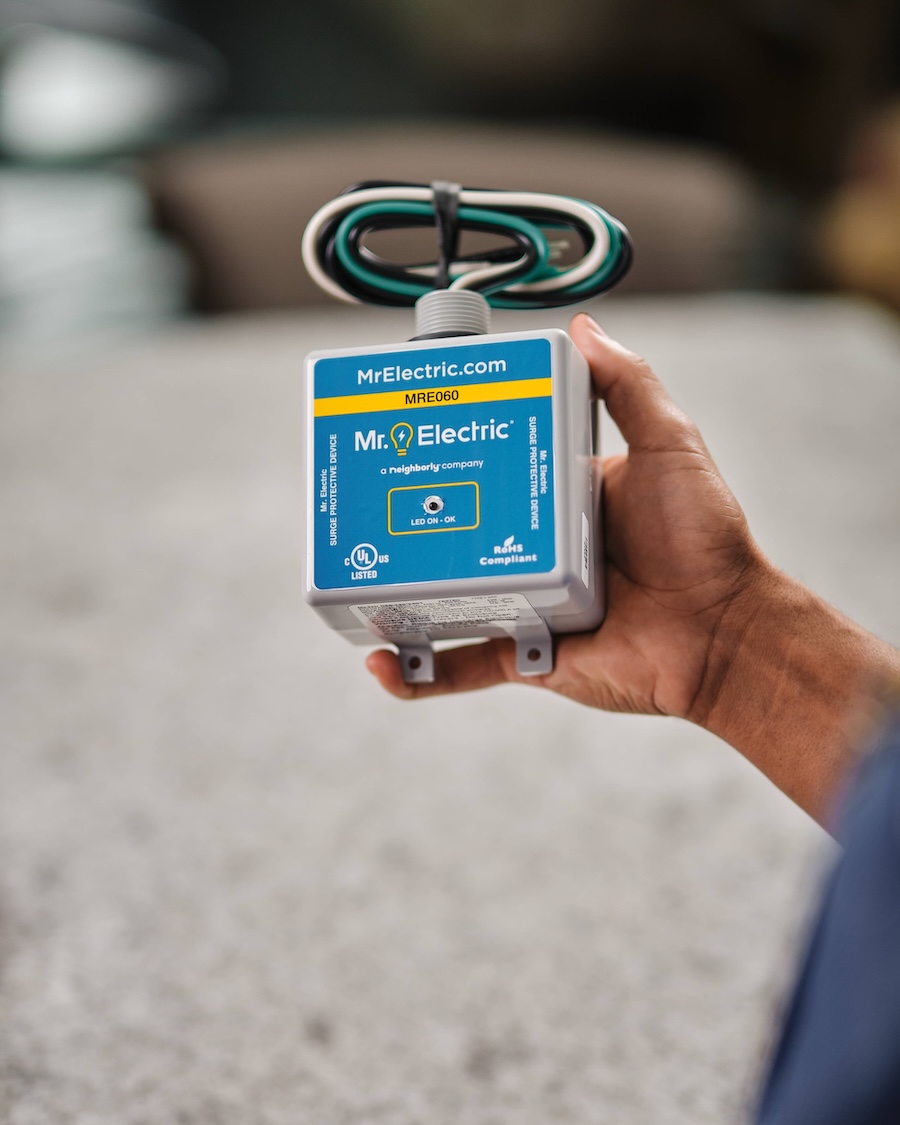
Installed directly at your electrical panel, a whole house surge protector defends your entire home from external and internal surges alike. Instead of allowing a surge to enter your wiring and race toward your electronics, these systems stop the spike at its source. Plus, these systems are rated at 50,000 to 80,000 joules or higher.
But let’s talk about what most homeowners are thinking: costs.
Buy six decent surge-protecting power strips at $30 each and you've spent $180. Those strips protect maybe a dozen devices while leaving everything else exposed. One fried HVAC compressor, gaming system, or home office setup and you’re looking at over $1,000 in repair or replacement costs.
A whole-house surge protector is going to cost more than buying a single power strip, but when you consider the price of buying and replacing multiple strips and the cost of electrical repair service, the numbers become clear.
The bottom line is the bottom line, and Mr. Electric understands. This is why we boast price quotes BEFORE the work begins. In fact, we trust our certified electrician so much that we back our workmanship with a 1-year guarantee.
A ceiling fan is surely going to make some noise, but it should not sound like a small construction project. It’s natural to hear a gentle hum from…
Read More +
Air fryers have quickly become a kitchen favorite. They cook food fast, use less oil than traditional frying, and make menus easy to prepare. For many modern families,…
Read More +
Like any piece of electrical equipment, surge protectors do not last forever. Years of power surges, lightning activity, and normal wear can reduce their ability to protect your…
Read More +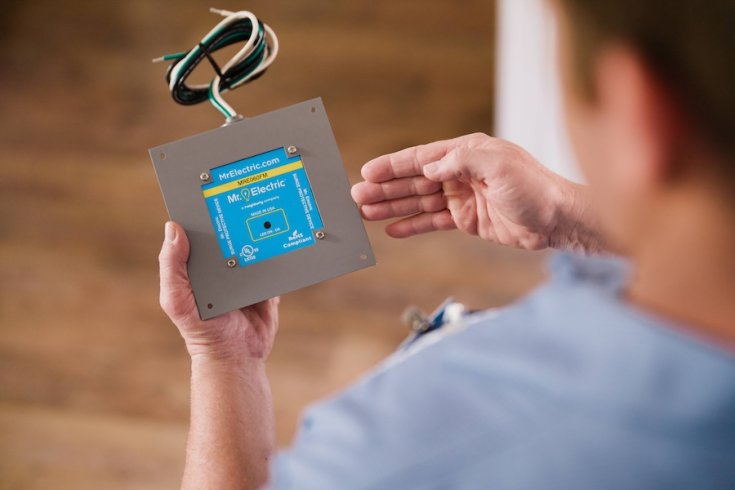
A standby generator brings priceless peace of mind during a power outage. Within seconds of your property losing utility power, the generator starts automatically and restores electricity to…
Read More +
The electrical panel controls how power moves through the building, and replacing it is a major project that affects safety, convenience, and the future capacity of your electrical…
Read More +