Menu

Call Us Today!
385-355-3822We Are Family & Veteran Owned
Schedule Service NowHire Local Trusted Electricians Now
Call this Wednesday to Get $35 OFF
Call this Wednesday to Get $35 OFF
Call Us Today!
385-355-3822Hire Local Trusted Electricians Now
Call this Wednesday to Get $35 OFF
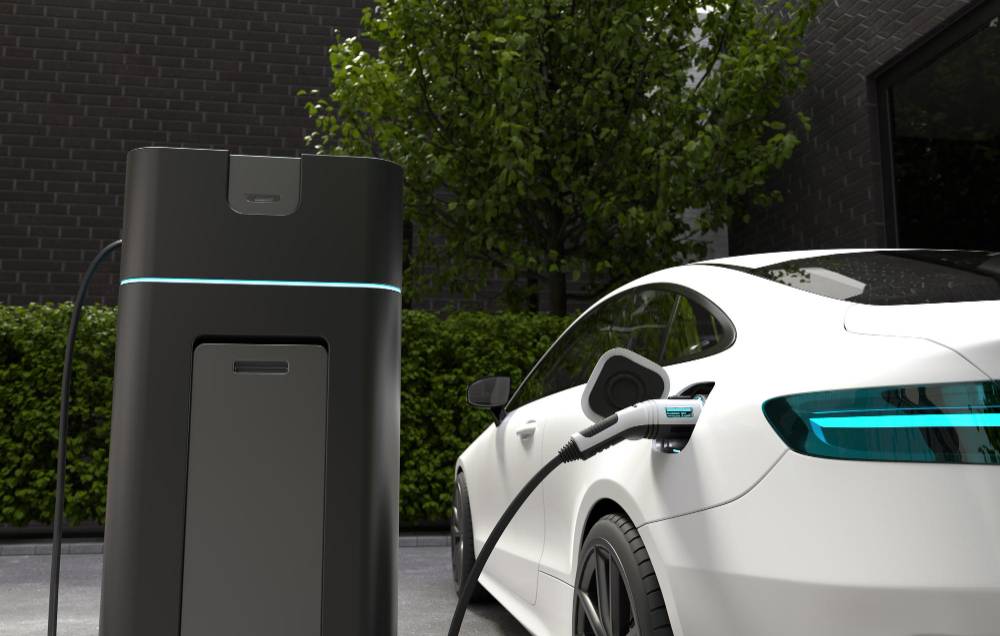
Electric vehicles are marketed as environmentally-friendly and energy-efficient alternatives to vehicles powered by internal combustion engines, but one big drawback has to do with charging. There are more and more public charging stations popping up across the nation, but long lines and scarcity are problematic.
There's a better way to charge.
With an onsite charging station at your home, you can enjoy convenience as well as lower charging rates. Charge during off-peak hours and you get even more affordable charging. As a cherry on top, an onsite electric vehicle charger installation increases property value.
In this brief article brought to you by Mr. Electric, we expand on the long-term savings of charging at home versus at public stations. If you’re looking for a certified electrician to install, replace, or repair your EV charger, then call or message Mr. Electric to get in touch with a local, uniformed professional.
When you charge your electric car at a public station, you pay whatever price that station charges. These prices change depending on where you live and which company owns the station. Some public stations charge by the minute, others charge by how much electricity your car uses, and a few charge flat fees for each charging session.
Public charging stations usually cost between thirty and sixty cents for each kilowatt-hour of electricity. That might not sound like much, but it adds up fast. If your electric car has a 60-kilowatt-hour battery and it's completely empty, then filling it up could cost eighteen to thirty-six dollars at a public station.
Fast charging stations cost even more. These special stations charge your car much quicker, but you pay extra for that speed. Fast chargers often cost fifty cents to one dollar per kilowatt-hour. That same 60-kilowatt-hour battery would cost thirty to sixty dollars to fill up completely.
Some public stations also charge you for parking while your car charges. If you leave your car plugged in after it finishes charging, you might pay extra fees.
Charging your electric car at home costs way less than using public stations. You pay the same price for electricity that you pay for running your refrigerator, lights, or TV. Most homes pay between ten and fifteen cents per kilowatt-hour for electricity.
Using the same 60-kilowatt-hour battery example, charging at home would cost only six to nine dollars for a completely empty battery. That's three to four times cheaper than public charging stations and six times cheaper than fast chargers.
Many electric companies offer special pricing called "time-of-use rates." These plans charge different prices depending on what time of day you use electricity. During busy times when everyone uses lots of electricity, the price is higher. During quiet times when fewer people use electricity, the price is less.
The cheapest times are usually late at night and early morning. Most electric companies charge about half price during these off-peak hours. That means your electricity might cost only five to eight cents per kilowatt-hour instead of ten to fifteen cents.
So, fast-charging at a public station can cost fifty cents to one dollar per kilowatt-hour while conveniently charging at home during off-peak hours can cost only five to eight cents per kilowatt-hour!
Beyond saving money, home charging means you never wait in line at charging stations, you never drive around looking for available chargers, and you never worry about charging stations being broken or out of service.
Plus, an onsite electric vehicle charger installation in Lehi, UT will make your property more attractive to future buyers and tenants. By some estimates, you get back more than what you paid for installation.
But an onsite charger requires a dedicated circuit with the right amount of power, and setting that up requires the expertise of a certified electrician.
Luckily, local professionals are just a call away. Contact Mr. Electric for anything from emergency electrical repair service to a EV charger installation or replacement. Our team has the expertise, experience, and equipment to get the job done right.
That musty smell hanging in your bedroom isn't coming from you; and those stuffy living spaces with thick and stale air aren't your imagination. The problem is that air isn't…
Read More +
Let's be honest: most electrical work doesn't exactly spark joy. You call an electrician because something's broken, money leaves your wallet, and you hope it doesn't happen again. That's just…
Read More +
Electricity powers our modern lives, but it's also incredibly powerful and unpredictable. Lightning strikes and utility company maintenance can send millions of volts surging through electrical wiring, destroying everything connected…
Read More +
Power outages are frustrating: One minute everything is working normally, and the next minute the lights are out, the refrigerator is warming up, and your home or business is at…
Read More +
For many Salt Lake City property owners and managers, the electrical panel sits out of sight and out of mind – typically in a closet, basement, or back room. As…
Read More +