Menu

Call Us Today!
385-355-3822We Are Family & Veteran Owned
Schedule Service NowHire Local Trusted Electricians Now
Call this Tuesday to Get $35 OFF
Call this Tuesday to Get $35 OFF
Call Us Today!
385-355-3822Hire Local Trusted Electricians Now
Call this Tuesday to Get $35 OFF
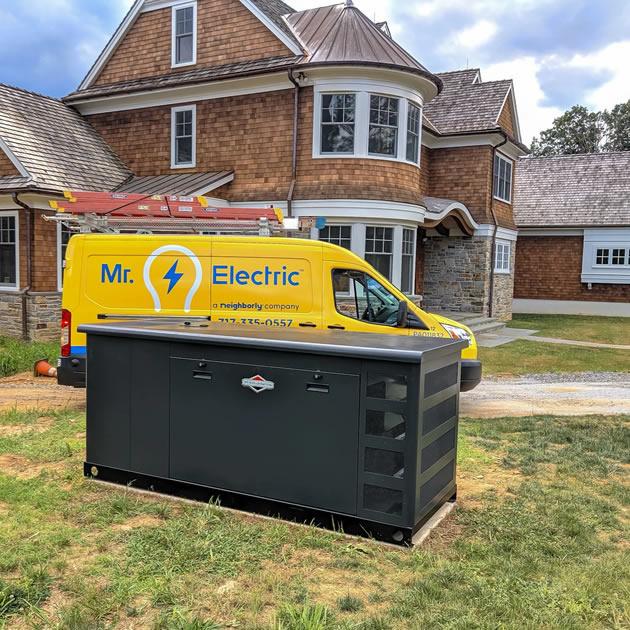
A dependable generator becomes one of your most valuable tools during outages, storms, or unexpected electrical failures. You count on it to keep your lights on, your appliances running, and your home or business safe. That reliability doesn’t happen by accident, your generator needs consistent care to perform at its best.
In this blog post, our professionals from Mr. Electric will share generator maintenance tips for long-term reliability.
Your generator’s engine works hard, and you need to treat it like any other machine with a motor—by giving it the lubrication it needs. You should make it a habit to inspect the oil levels before each use or based on the manufacturer’s recommended schedule. Keeping the oil clean and filled helps prevent overheating and friction damage. If you’re unsure about proper oil maintenance, calling a trusted professional or local electrical repair service ensures the job is done correctly.
Your generator requires clean airflow to run efficiently, and clogged air filters can suffocate the engine. You should check your filter every few months or sooner if you operate your generator in dusty environments. A clean filter boosts performance, improves fuel efficiency, and reduces unnecessary strain. If the filter looks dark, dirty, or worn, replacing it instantly protects your investment.
You want confidence that your generator can handle the appliances and electrical systems you rely on. Running your generator under load allows you to see how it performs under actual conditions. A brief test each month helps you catch early signs of trouble such as inconsistent power output, slow startup, or engine struggle. Having an electrician in Utah evaluate test results is a smart move if anything seems off.
Old or contaminated fuel is one of the most common causes of generator failure. You should always use clean, high-quality fuel and rotate your supply so nothing sits unused for too long. Sludge or debris in the fuel can hinder performance, so cleaning the fuel tank and fuel lines periodically maintains long-term reliability.
A generator battery that’s weak, corroded, or improperly charged can leave you without power at the worst moment. You should check the battery terminals for corrosion and clean them as needed. Testing the battery’s voltage makes sure that it’s holding a charge. Many generator failures happen because of neglected batteries, keeping it maintained guarantees smooth and quick startups.
Your generator produces heat during operation, which makes a functioning cooling system essential. You should check coolant levels regularly and top them off with the appropriate mixture. Inspect all hoses for cracks, leaks, or brittleness. Even a small coolant leak can escalate into major damage. Proper cooling guarantees that your system doesn’t overheat during heavy or prolonged use.
Allowing your generator to sit idle for long periods can cause components to dry out, stick, or lose efficiency. Running it for 10–20 minutes each month keeps internal parts lubricated and ensures all systems operate smoothly. This simple routine also helps you detect unusual sounds, smells, or vibrations, giving you time to schedule a professional inspection if necessary.
Even if you take care of regular checks, a trained electrician can spot issues you might overlook. Annual or semi-annual inspections by an electrical service ensures that wiring, voltage regulation, engine components, safety features, and overall system health are in peak condition. If you’ve recently invested in a new generator installation, professional maintenance becomes even more important to protect your warranty and guarantee long-term dependability.
Are you in need of an electrician? Luckily, we at Mr. Electric have dedicated workers ready at your service. Contact our representatives for more questions.
That musty smell hanging in your bedroom isn't coming from you; and those stuffy living spaces with thick and stale air aren't your imagination. The problem is that air isn't…
Read More +
Let's be honest: most electrical work doesn't exactly spark joy. You call an electrician because something's broken, money leaves your wallet, and you hope it doesn't happen again. That's just…
Read More +
Electricity powers our modern lives, but it's also incredibly powerful and unpredictable. Lightning strikes and utility company maintenance can send millions of volts surging through electrical wiring, destroying everything connected…
Read More +
Power outages are frustrating: One minute everything is working normally, and the next minute the lights are out, the refrigerator is warming up, and your home or business is at…
Read More +
For many Salt Lake City property owners and managers, the electrical panel sits out of sight and out of mind – typically in a closet, basement, or back room. As…
Read More +